
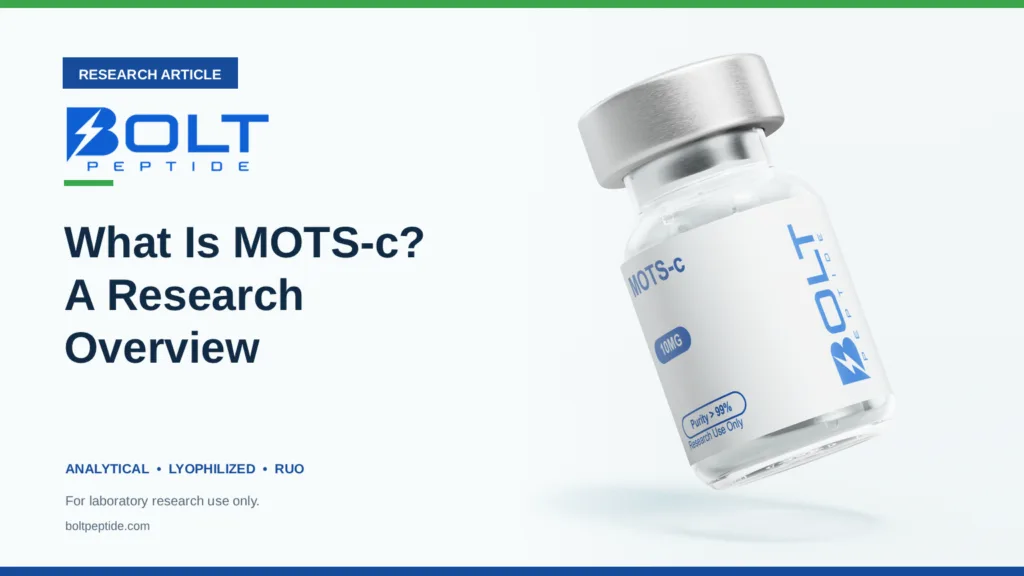
MOTS-c is a 16-amino-acid mitochondrial-derived peptide (MDP) encoded within the mitochondrial 12S rRNA gene, studied in preclinical and in-vitro research for its role in mitochondrial signaling and metabolic regulation. It is sold strictly for research use only (RUO). The information below summarizes laboratory and animal findings and does not describe effects in humans. This product is not for human use, is not FDA-approved, and these statements have not been evaluated by the FDA.
Quick facts
- Class: mitochondrial-derived peptide (16 amino acids, encoded in mtDNA 12S rRNA)
- Research focus: metabolic and mitochondrial research (preclinical/in-vitro/animal)
- Form: lyophilized powder for laboratory research use only
What is MOTS-c?
MOTS-c (Mitochondrial ORF of the Twelve S rRNA type-c) is a small peptide first described by Lee and colleagues in 2015. Unlike most peptides studied in the laboratory, it is encoded by a short open reading frame located within the mitochondrial 12S rRNA gene rather than by nuclear DNA. This places MOTS-c in a small family of mitochondrial-derived peptides that researchers study as possible signaling molecules involved in mitochondrial–nuclear communication.
What does the research show?
In the original characterization, researchers reported that MOTS-c influenced cellular metabolic pathways and was associated with changes in insulin sensitivity and glucose handling in mouse and cell-culture models — findings described entirely in preclinical systems [1]. A 2018 study reported that, under metabolic stress, MOTS-c can move from the cytoplasm into the nucleus, where it was associated with regulation of stress-responsive and antioxidant-related genes [2]. A 2023 review summarized the broader preclinical literature on MOTS-c across metabolic and aging-related research models [3]. These are laboratory and animal observations only; they do not establish any effect, benefit, or safety profile in humans.
Mechanisms studied in the lab
- AMPK pathway: preclinical reports associate MOTS-c with activation of AMP-activated protein kinase (AMPK), a central cellular energy-sensing pathway [1].
- Metabolic regulation: in cell and animal models, MOTS-c has been studied in the context of glucose metabolism and the folate–methionine cycle.
- Nuclear translocation under stress: under glucose restriction or oxidative stress, MOTS-c has been observed translocating to the nucleus in an AMPK-dependent manner to influence gene expression [2].
Research status and safety
MOTS-c is offered exclusively as a research chemical for laboratory use. It is not a drug, dietary supplement, or cosmetic, and it is not intended to diagnose, treat, cure, or prevent any disease. It is not approved by the FDA for human or veterinary use, and it must not be administered to humans or animals. All effects described in the scientific literature are limited to in-vitro systems and laboratory animals.
Handling
MOTS-c is supplied as a lyophilized (freeze-dried) powder, generally stored cold and protected from light and moisture; researchers should follow the product label and any available product- or lot-specific documentation. For general technique, see our guide on laboratory concentration and handling reference, and browse related materials in the catalog. View specifications and availability here: MOTS-c — product details.
FAQ
Is MOTS-c safe to take? MOTS-c is a research-use-only material and is not for human or animal consumption. It has not been evaluated or approved by the FDA for any use in people, and no human safety profile has been established.
What makes MOTS-c different from other peptides? Most peptides studied in the lab are encoded by nuclear DNA. MOTS-c is unusual because it is encoded within the mitochondrial 12S rRNA gene, making it one of a small group of mitochondrial-derived peptides studied for mitochondrial–nuclear signaling.
Why does Bolt Peptide only sell it for research? MOTS-c remains an investigational compound studied only in preclinical (cell and animal) models. Selling it strictly for research use keeps its use within the lawful, intended laboratory context.
References
- Lee C, et al. The mitochondrial-derived peptide MOTS-c promotes metabolic homeostasis. Cell Metab. 2015.
- Kim KH, et al. MOTS-c translocates to the nucleus to regulate gene expression under metabolic stress. Cell Metab. 2018.
- Zheng Y, et al. MOTS-c: a mitochondrial-derived peptide (review). Front Endocrinol. 2023.
For research use only. Not for human or veterinary use. Not FDA-approved. Statements have not been evaluated by the FDA.
Source research-grade peptides from Bolt Peptide
Review current product availability and available documentation before ordering. Reference-lot records do not confirm the lot that will ship. For research use only.
MOTS-c research peptide →Shop all research peptides